Learn About Exploration
Why & How We Find Copper
Copper deposits are relatively rare in Earth’s crust. Exploration geologists combine:
- Literature & historical records
- Surface rock observations and mapping
- Mineralogical clues (veins, gossan)
- Geophysical surveys for buried anomalies
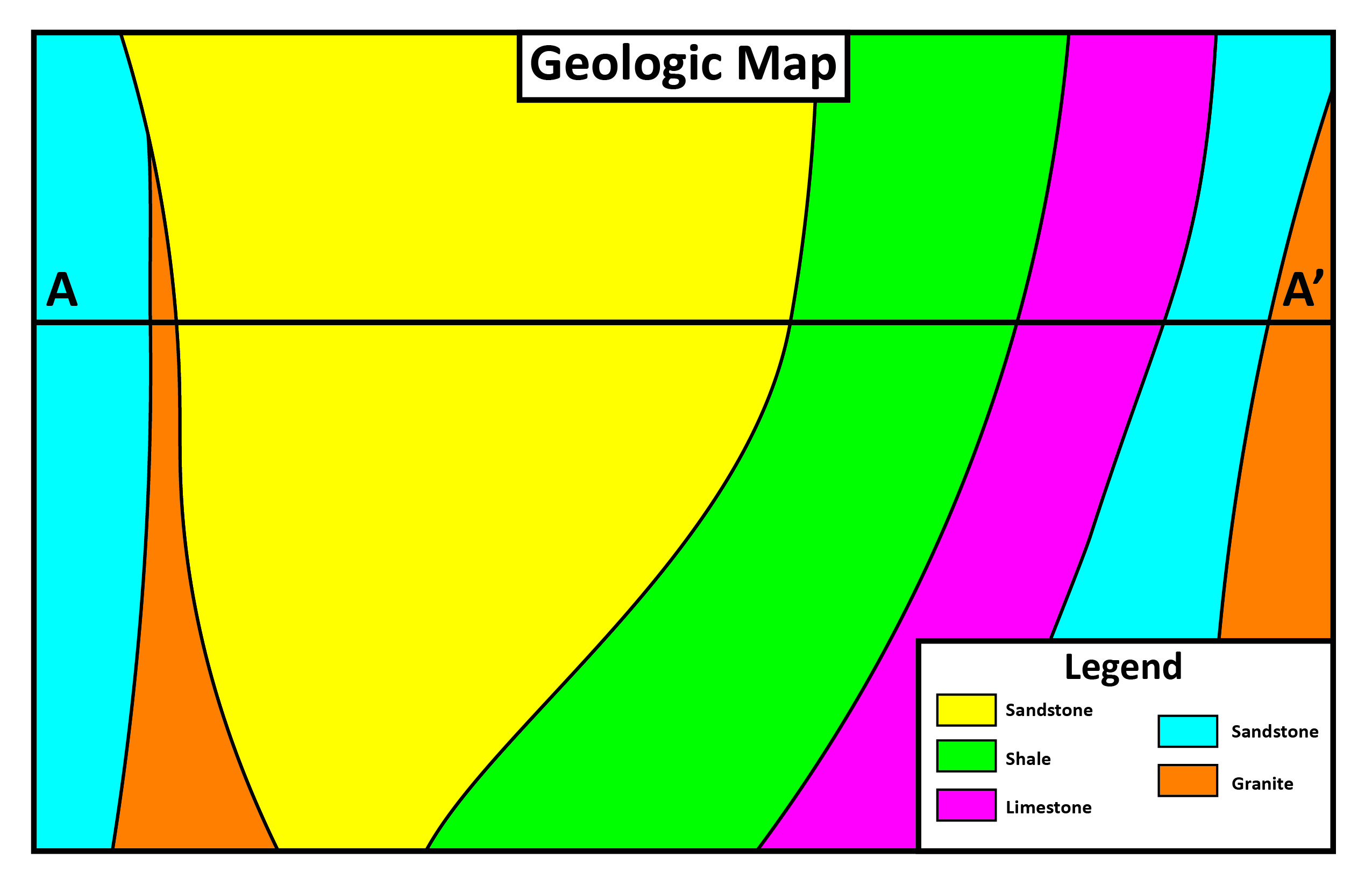
Discuss: What rock types and textures might signal a porphyry copper system?
Geologic Mapping & Porphyry Textures
Arizona’s porphyry copper deposits are associated with coarse‐crystal granite (“porphyryt ic”). Geologists:
- Identify porphyritic outcrops
- Map distribution of host lithologies
- Collect rock samples for lab analysis
Hands‑On: Examine a porphyry sample—spot large feldspar phenocrysts vs. fine matrix.
Veins, Pyrite & Gossan
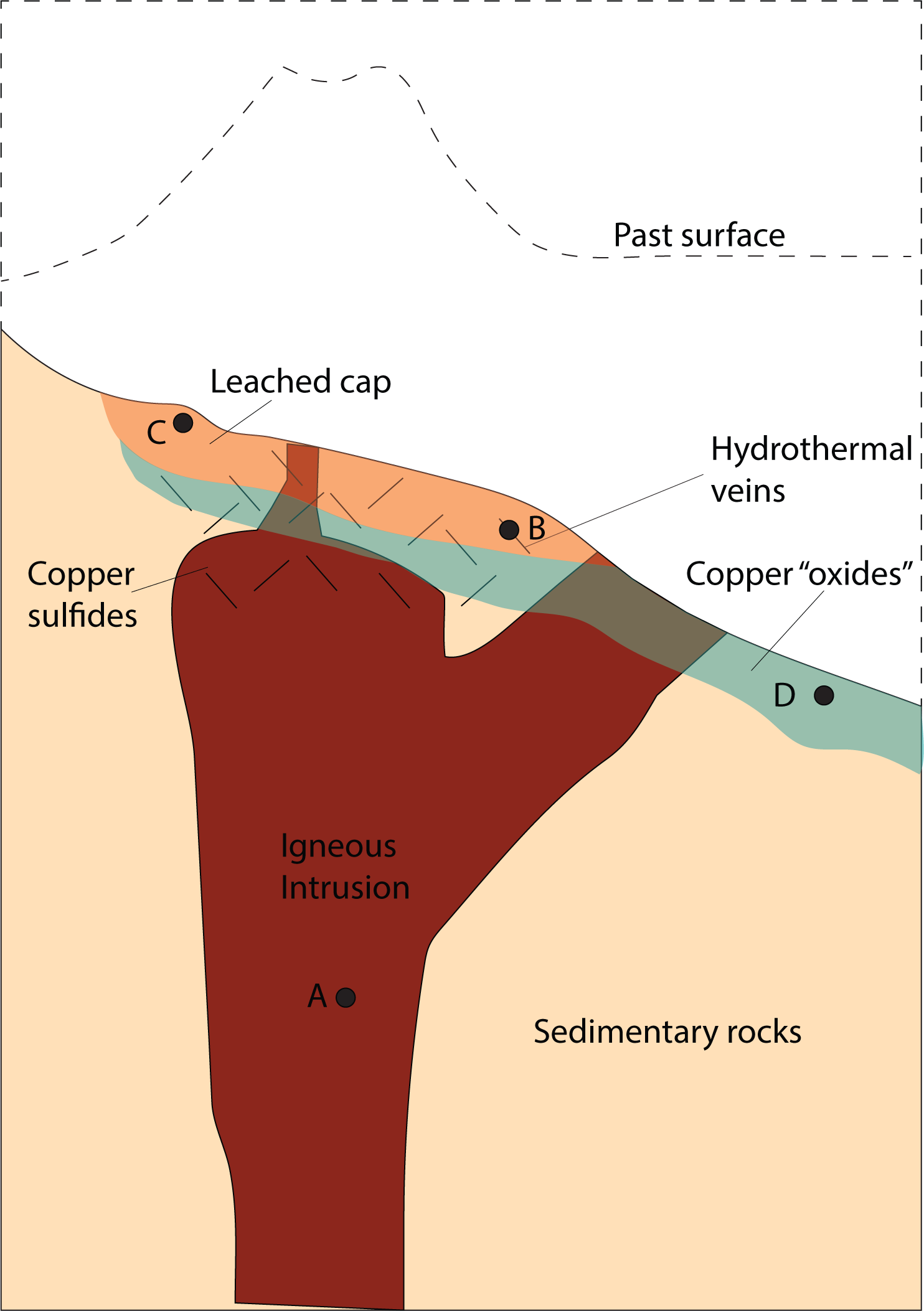
Hydrothermal fluids travel along fractures, depositing copper minerals (e.g., chalcopyrite) in veins. Sulfide minerals (pyrite) at surface oxidize to form gossan:
- Rust‐colored cap from weathered pyrite
- Indicator of deeper sulfide zones
- Acidic fluids can leach and transport copper → secondary oxides
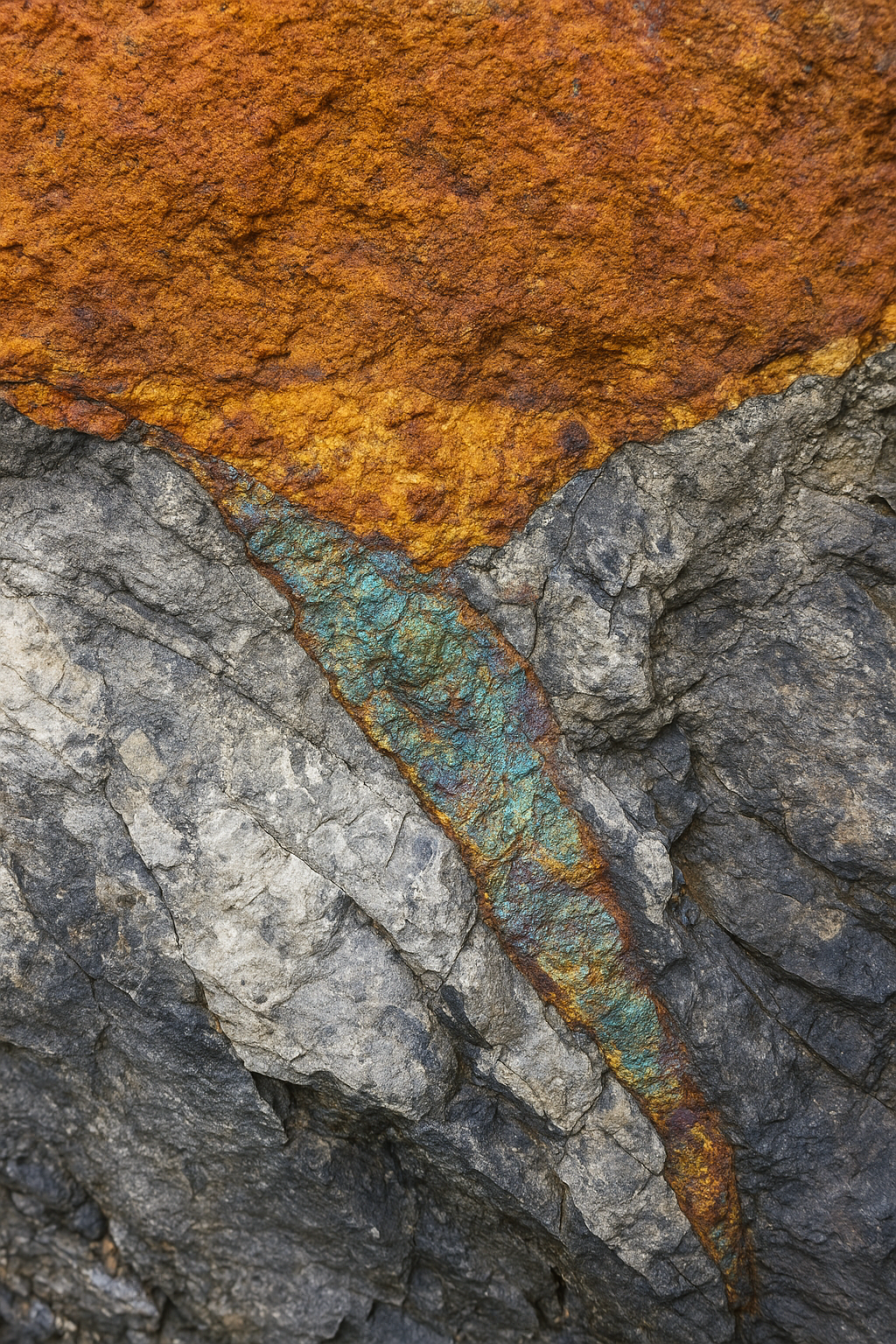
Observe: Compare chalcopyrite‐rich vein vs. oxidized gossan outcrop.
Seeing Below the Surface: Geophysics
Surface mapping reveals only the top few meters. To explore deeper (up to 1 mile), geologists employ geophysics:
- Magnetics: Detect variations in rock magnetic susceptibility
- Induced polarization: Measure charge build‑up in mineralized zones
- Seismic: Image subsurface layering via sound waves
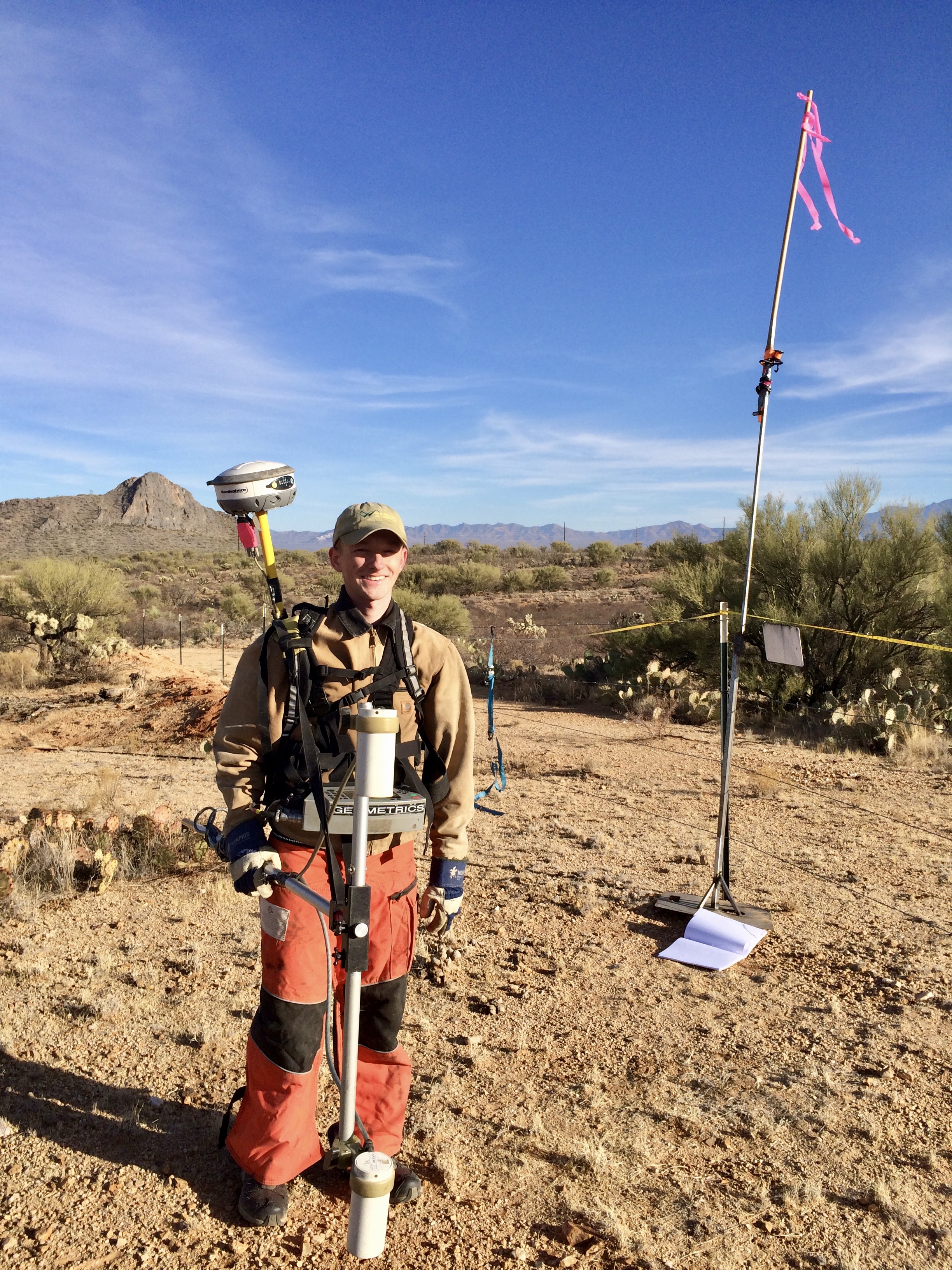
Demo: A buried magnet test in a plastic box—run a handheld sensor to locate the anomaly.