Learn About Ore Formation
Concept Overview
An ore deposit is an unusually high concentration of copper within rock. To mine copper, we need to understand how it forms underground.
Geologists study igneous intrusions and Earth's geologic processes to uncover how elements like copper concentrate into valuable ore deposits.
Activity 1: Concentration of Copper in Rice
Materials:
- 0.007% Cu/rice mixture (29,000 grains + 2 copper beads)
- 1% Cu/rice mixture
- Large bowl, small beaker, funnel
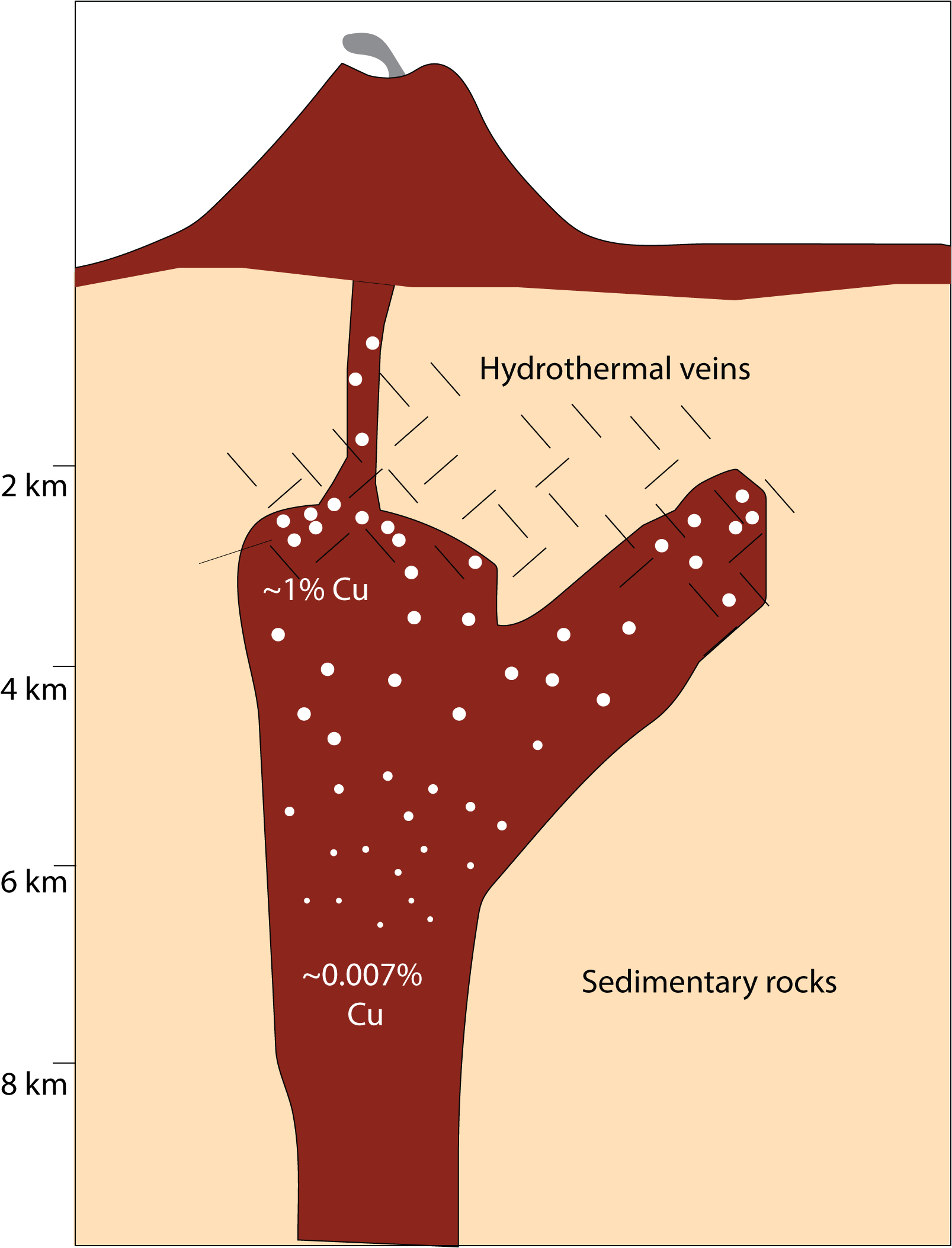
Start with the 0.007% mix. That simulates copper in typical granite magma. Ask students to extract a more concentrated mix by placing both beads in a small beaker with less rice. This mimics nature concentrating copper into ores.
Then, use the 1% mix to represent actual copper ore. It's visually easier to detect the copper beads, showing how enriched ore differs from the source magma.
Activity 2: Bubbles in a Magma Chamber
Materials:
- Flask, beaker, funnel
- 100mL water, 300mL oil, food coloring, half Alka Seltzer tablet
Fill the flask with water and oil. Add coloring, then drop in Alka Seltzer. Bubbles rise through the oil, carrying colored water—mimicking bubbles in magma that can capture and lift copper to the top.
In nature, these gases don't escape—pressure builds, fracturing rock. When hydrothermal fluids rush in, copper-rich veins form in those cracks.
Scientific Concepts
- Pressure and temperature influence state changes in magma
- Gas bubbles carry elements like copper upward
- Gases trapped at the surface create fractures and veins in rock
Educational Standards
- 6.P1U1.2 – Pressure/temperature effects on states of matter
- 7.E1U1.5 – Modeling matter & energy flow in the geosphere
- HS.E1U1.12 – Energy/matter transfer in Earth's systems
- HS.E1U3.14 – Resources, climate, and geologic interaction